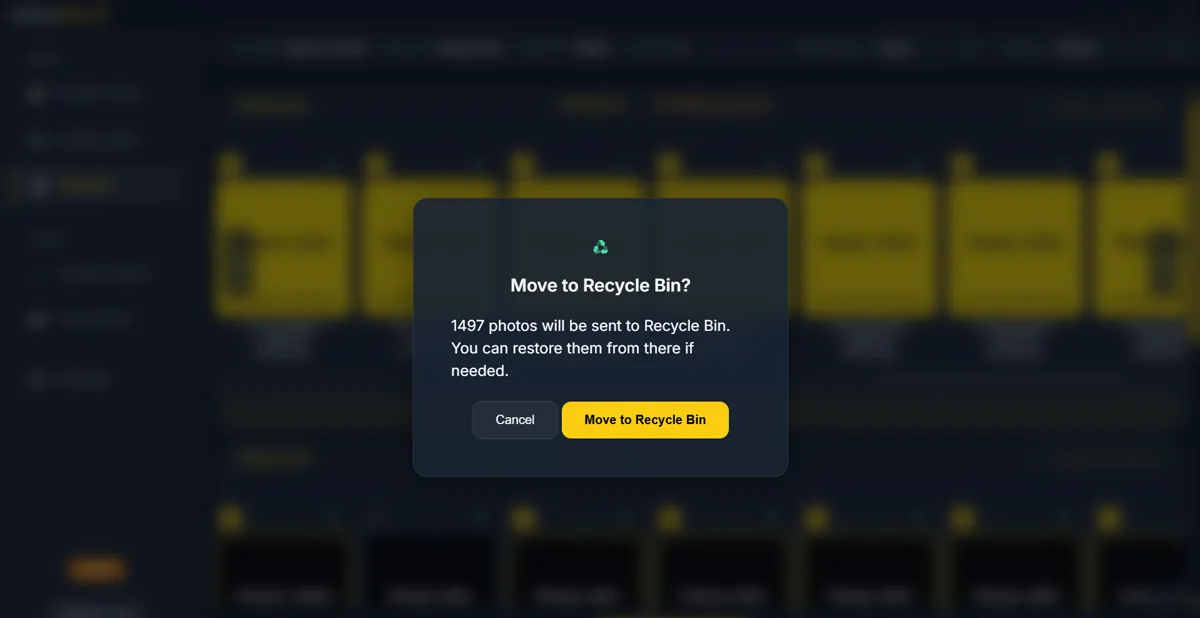
Duplicate graphic files are extra copies of the same picture, or shots that look alike and carry different names. PictureEcho on Windows finds both in the folders you add. You review each group, then send the extras to the Recycle Bin.
Add the folders that hold the graphics
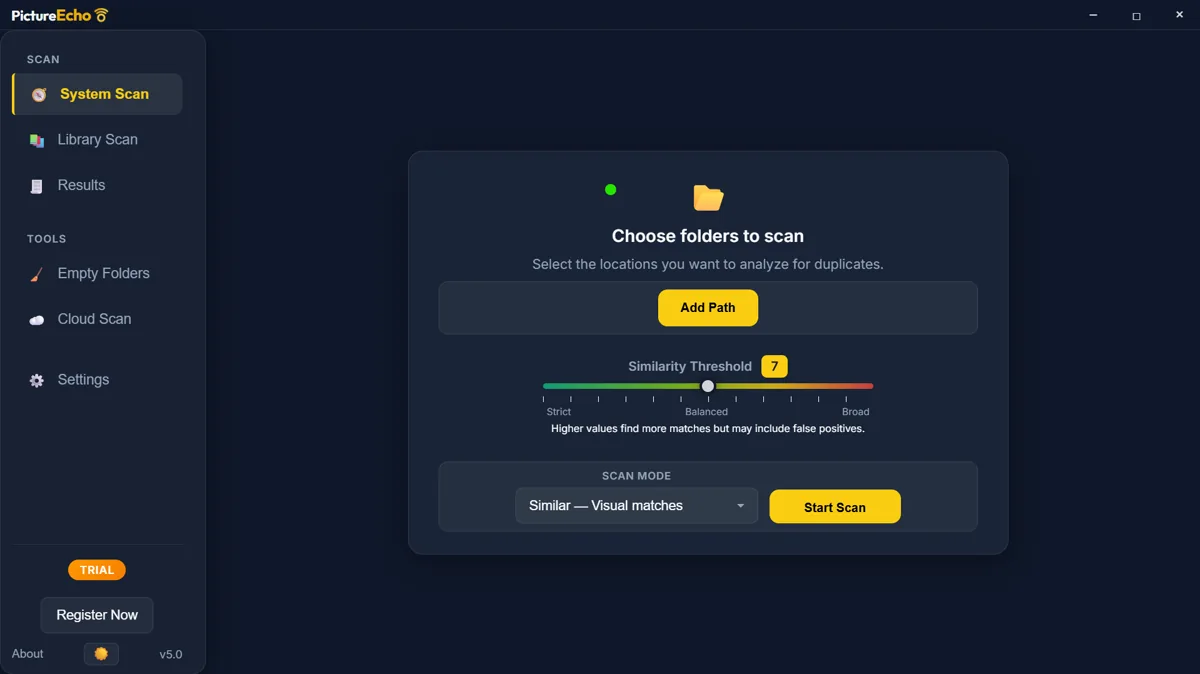
Open System Scan and use Add Path for each folder of pictures. The scan reads JPEG, PNG, GIF, HEIC, TIFF, and common camera RAW types. It does not look for duplicate videos. A file that is only a cloud placeholder, and not actually on the PC, is skipped.
Similar graphics and exact matches
Similar mode groups pictures that look alike, including a resized export or a burst next to the original. The threshold runs from 1 to 13 and starts at 9. A higher number finds more matches and can include pictures that are not really duplicates. Exact mode is the other choice. It groups exact matches. It is not a separate file-type filter.
Choose which file to keep
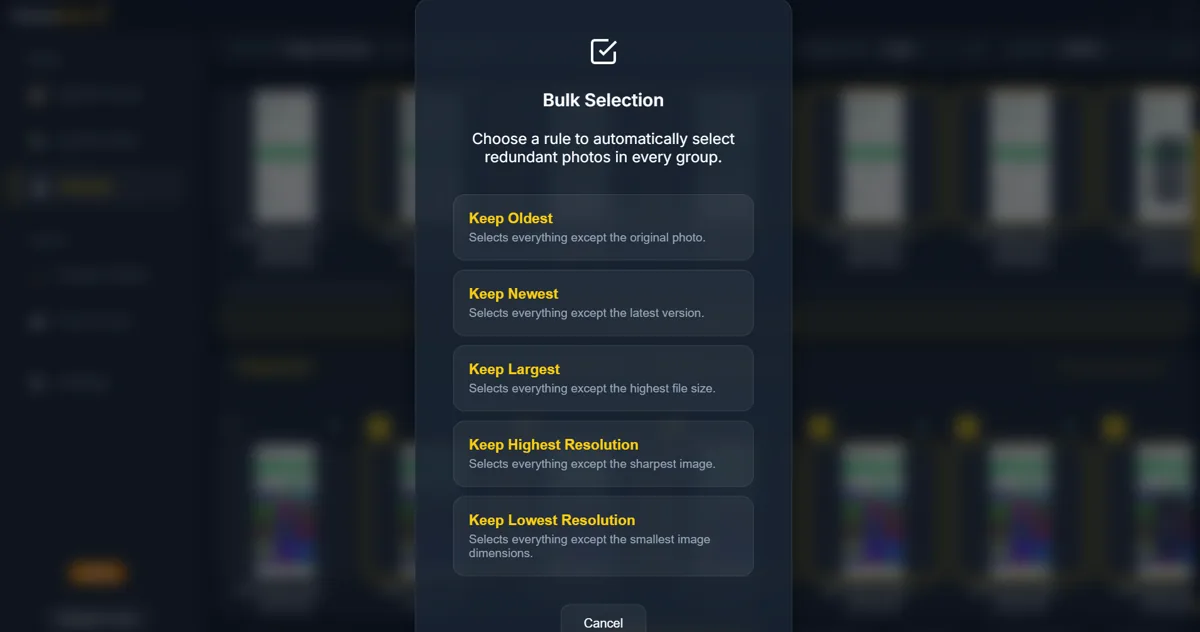
Select Duplicates marks the extras in every group. The rules are oldest, newest, largest, highest resolution, and lowest resolution. You pick the rule, and you can change the ticks before anything is removed. The app does not choose the keeper by itself.
Send the extras to the Recycle Bin
Move puts the selected files in a folder you choose, so they stay on the disk. Recycle Bin can be restored from Windows. Delete is permanent and cannot be undone. The trial cleans up 10 groups. A licensed copy continues past that limit.